Categories
Uncategorized

A happiness starts up, secret and wild : on loss, endings and renewal in a time of nature dislocation and soul hunger.

across the thin bridge of the wild psyche


Endings shape stories

As the year ends I want to review what I’ve written this year. Endings help create stories. As the end of something approaches our psyche begins to spin story from the coming loss. We return back to the start and try and piece together what happened. Story gets created from this process of loss. The psyche travels back through the threads of memory it has spun, seeks out what’s significant and links them together. Mostly it does this through searching for moments of strong feeling.

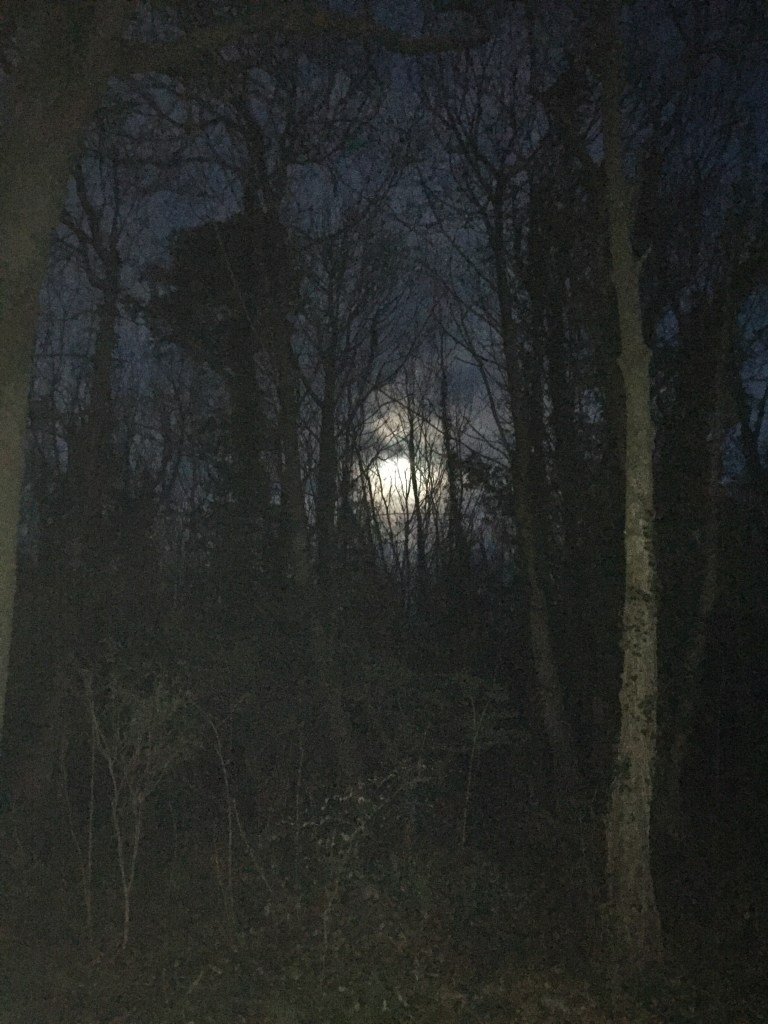
Certain moments from the year appear. I think of moments I’ve engaged with the practice of an imaginal ecology. I remember the Old Oak that stands in a particular woods. These ancient woods grow dense on the steep chalky slopes that lead up to the South Downs way. The steepness has protected them, meaning this is one of the oldest woods in the area. One steep ride from the high ridge opens up into a lower lying bracken field that faces this old tree. This Old Oak stands solitary amongst a shock of ferns and brambles, placed just by a crossroad of five ways. This bracken field resembles a kind of wild village common. But no one comes here to play cricket or set up market. After dark, the moonlight on the uncurled fronds gives the place a eerie quality, filled with a kind of wild calm. As I returned to it, it began to take on this quality stronger, such that I imagined it to be somehow a grandmother sentinel within the wood’s matrix, a place to stand and feel keyed into a network that I sometimes feel but don’t know.

One night I come to a fork in the path in these Woods at midnight, the paths obscured by darkness as I guide a small group of friends through the woods at night to a place to a sheltered place camp on the high ridge. The pressure is on, it’s dark and no one else knows the way except me, and I’m suddenly not sure which path to chose. The night has changed everything and challenged my sense of knowing the place, reminding me that I’m still a visitor here, a stranger.
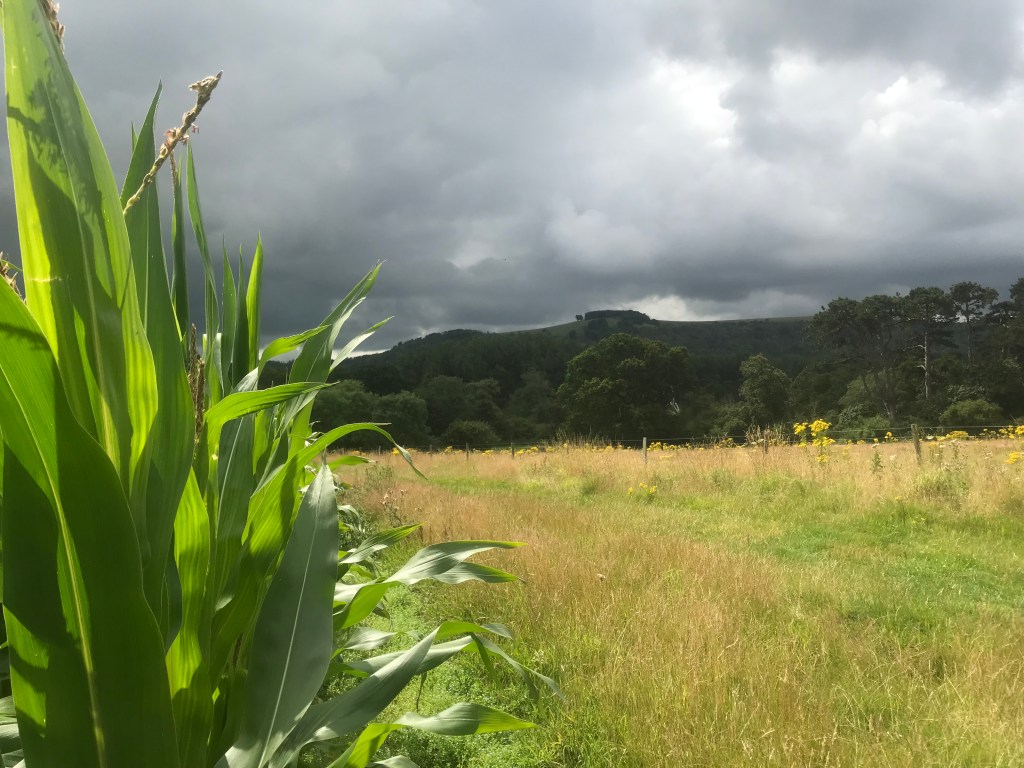


This image has an empty alt attribute; its file name is 58bb6e3d-20af-44d2-a7bf-60e75321c0b1.jpeg
Cornfields near Berwick, by Toby Chown

Memory as myth

Strong feelings of memory get composed and threaded into images by psyche. When I speak of images I don’t mean a personal visual slideshow. Understanding images as feeling toned, as embodied, not only visual but sensory, synaesthetic, linked to interoception, proprioception. Deep images flow from these perceptions, a pulse of images, like a pulse of blood. Ritual serves to heighten feeling through creating strong boundaries and containers for it, like the banks of a river it allows images to flow or a lake to hold water. Storytelling lends itself to ritual, with it’s crossing over and return into the imaginal. Endings create stories through the container they offer. All that happened becomes able to be felt and seen, as if a cup had been dipped into a river and can now be drunk from.

As I look back at what I’ve been drawn to write this year, certain images and themes repeat- most notably pathways and doorways. Finding an repeating image within memory draws that memory closer to myth. What seemed at the time like just wandering through the woods takes on a soulful level. To take on the role of the guide and reaching a forking path in the dark woods has a mythic quality as well as a practical necessity in that moment.

I wrote a series of essays called “Pathways into the imaginal.” I felt that the problem with an imaginal ecology, is that despite Corbin’s intentions and my love of it, the word “imaginal” contains confusion and tension. On the one hand it starts to collapse back into the word “imaginary” with it’s meaning of something being unreal. On the other hand it also can become spiritualised and superior, referring to something lofty and unattainable. The concept of the imaginal as mediating and permeating these two realms is something Corbin offers us, we might be alert to this tendency to split the imaginal apart. It’s worth finding ways to ground our desire to ascend and to make the mundane soulful.

So I wanted to show how the imaginal is always already present. Encountering animals, listening to music and experiencing heartbreak may seem like quite different kettles of fish but they all offer pathways into an imaginal ecology. One of the challenges of an imaginal ecology, to find the the psyches roots in the dark earth. Yet in doing so not turn nature into a parent substitute, filled only with unresolved projection and yearning. Timothy Morton calls this task “Ecology without Nature.” I take him to mean it’s good to find the ecological thought and where it is present in the city, in work, in the home and where it is not. This is a task similar to the one that faces us at the end of therapy, where the challenge becomes to withdraw and digest projections placed upon the therapist or client.

Digesting projections through imaginal ecology

One way of doing this subtle work is to become more and more aware of our fantasies. We can become aware of how they permeate our identity, and ask what they want from us. We can notice how they have protected us and also prevented us from becoming. Psychology, as Jung taught it is certainly a process of dis-identification, a via negativa. We certainly do project our fantasies onto nature just as we do culture heroes, mentors, supervisors, writers, musicians.

And this is fine up to a point; it might be that this is just how we learn and how we relate; that the need to throw out flailing hook from our vulnerabilities to latches on to the generous loops offered by our culture heroes or Old Oak trees. The Old Oak seems well able to withstand such projections. What though, stands behind the projection, and how might we honour that? After all projections are not “just” projections, and certainly not only interior experiences; the world really does contain majesty and mystery that envelops our lives and soaks into our psyche, connecting it to the dreaming beast of the living world.
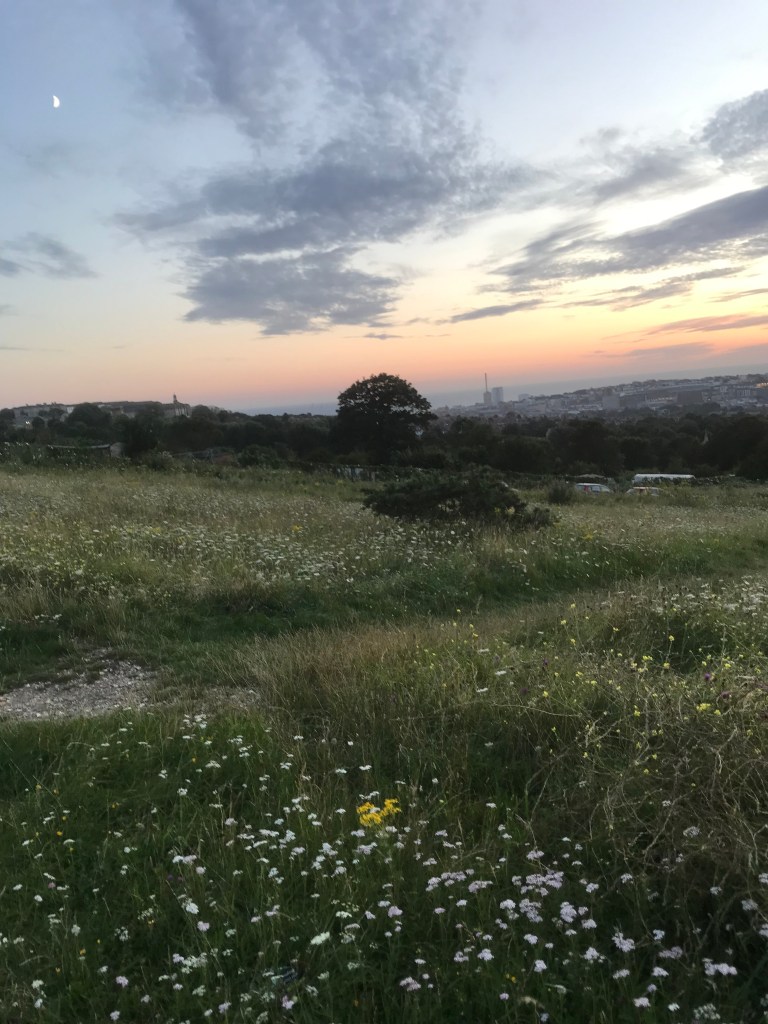


This image has an empty alt attribute; its file name is 0629bed5-c466-490f-af3a-8fd295899b91.jpeg
Wildflower meadow above Brighton, by Toby Chown

One thing that stands behind our projections may be an immense power that has only a partial interest in us. Something invisible that wants to come into the room that we don’t see, block or forget, but that keeps living within and around us, much as last night’s dreams keep bubbling away during the day even as the memory of them slides back into the body. One way of working with what stands behind our projections, is to discover what binds art to life. Art holds the incredible capacity we have for soul renewal . Art helps us to find the new in the old, in memories and histories.

“It is difficult
to get the news from poems
                        yet men die miserably every day
                                                for lack
of what is found there.”

wrote William Carlos Williams toward the end of his poem “from Asphodel, Greeny Flower.”

A strange seeming statement, given the peripheral position of poetry in most people’s lives. How does the line read if we think of “get the news” as not just the state of current affairs, but get the “renewal”? In this reading it’s not that it’s hard to get the 6 o clock news from reading poems. It’s that we need the newness that poetry offers us. As Ezra Pound said “poetry is news that stays new.”

We have become very used to an internalisation of Maslow’s hierarchy of needs, where physical needs, cognitive needs and safety need to be established first and then “aesthetic needs” or ” spiritual needs” might then be satisfied. But the problem with this is that it makes beauty and what art does seem to be the icing on a cake, and so disposable. If icing seems like a luxury then we are smothered in that, podcasts, netflix, instagram.

Poetry as confession, death and renewal

Consider though, that Carlos Williams was 77 when he wrote “Asphodel”, and near death. He wrote the poem as he approached death, penniless, nearly blind having suffered both stroke and heart attack. His career was in peril due to MacCarthyism and blacklisting. The shame and despair he felt drove him to spend three months in a psychiatric hospital where he worked on this poem. In it, he confronts and expresses his love for his wife of 40 years, shame and regret he feels about infidelity, pride, desire. The joy he feels at the beauty and love they’ve shared. It’s fluid, complex, controlled and full of beauty. In it he renews his love, and re-affirms it in the light of the deep vulnerability of his position and the contingency of his words. He does not plead or try to persuade, but rather presents image after image like wave of a sea. He finds a deep and rare love, one that has persisted and has become strong through renewal.

  “It is the mind
the mind
                        that must be cured
                                                short of death’s
intervention,
                        and the will becomes again
                                                a garden.  The poem
is complex and the place made
                        in our lives
                                                for the poem.
Silence can be complex too,
                        but you do not get far
                                                with silence.
Begin again.”

Even great art with words cannot guarantee such trivial miracles as being forgiven, becoming loved and atoning for hurting others. Yet as Williams words follow his poetic bent his confessions becomes less pleading and more like a strings of images. The injunction he gives here is to “begin again” – to be renewed. That’s easier than it sounds, given that rebirth of necessity must be preceded by death. So given that the pathways I chose to take this year into the imaginal were animals, music and heartbreak, it’s worth considering the death of a relationship, the death of an animal and the death of music as part of the pathway into the imaginal that leads to renewal. One great pathway into this renewal is a blue path, the blue of melancholy, grief, heartbreak and the blues, the blue that arises from the black rot of anger, resentment and revenge , softening it and bringing in feeling. Memories, like dreams can be a royal road into the alchemical blue of renewal, and that brings pain. For that reason we sometimes prefer to forget or to avoid memories.
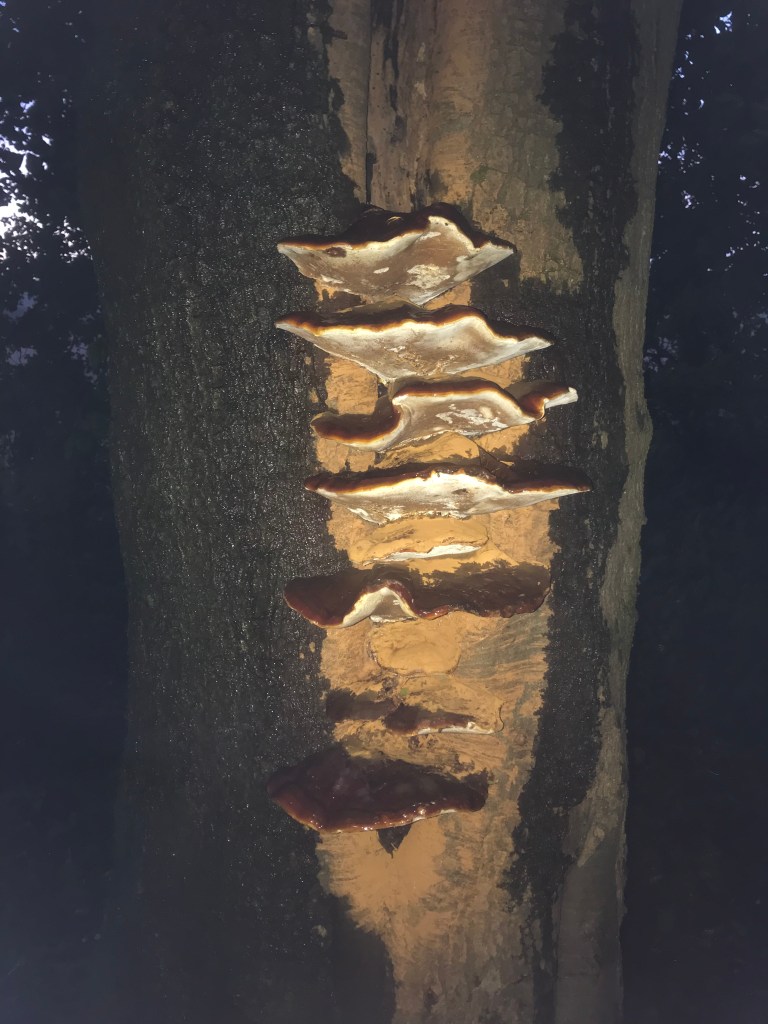


This image has an empty alt attribute; its file name is ef5c86f2-8c96-4889-a204-401280469108.jpeg
Bracket Fungus in nightwood by Toby Chown


Stories are not constructed but grown

However, in avoiding endings we also avoid story. And if we avoid our own story, we avoid both our own soul and our place in this world. It’s been another theme of the essays and posts this year that stories are not constructed but grown. That stories have a kind of life of their own, that changes a room in the telling of them. That what story is has been fundamentally and basically misunderstood, misused and abused in the worst ways possible, to create a wall.

Story had been excluded from academia as a way of knowing due to the perception of it as childish, untrustworthy and lacking authority. However, it’s fair to say that the “narrative turn” began in the 1960’s has permeated deeply into the general culture. Yet it often arrives in ways that reveal techno-capitalism’s deep influence, with “changing the narrative” understood as if it meant switching the channel, or getting a new team of scriptwriters in to improve your life. Narrative as a means of knowing has been used to escape the complicated insights of medical science as though we could chose a story we want to hear or as if personal resonance between story and data were the sole guide to it’s best interpretation. The desire to “change the narrative” often rests not on the tangled moss of stories, but on concealed convictions about purity – the desire for a pure story, rather than one that’s been corrupted, or manipulated, spun, twisted, re-framed or faked.

Yet this desire for purity, rather than offering a chance of genuine renewal, instead involves an avoidance of what alchemists called the “putrificatio” – the rotting process involved in genuine transformation. It’s worth remembering that our modern secular consumer society also has it’s roots in a mercantile puritanism that attacks imagination and seeks to dismantle myth and ritual and communal structures, replace them with a pure relationship with God. And that this same puritanism venerates the accumulation of money through the veneration of “hard work”.

Our desire for purity in a world that we have poisoned, our own fear that this poison will get into our bodies through the ecological matrix we belong to, brings near the darker aspects not only of our culture but our own psyche. For in order for purity to be maintened, some other group or person must be impure, be it men, women, catholics, puritans, doctors, politicians, witches, businessmen, demons, archons, antivaxxers, vaxxers, immigrants, brexiteers, liberal elites, George Soros, Trump supporters. When listed in this way it seems obvious, yet how often these generalisation infect our thoughts and speech when we are under pressure. And who is not under pressure now in a time of pandemic and ecological crisis?

It’s not to say we give up on making sound judgements about the issues and sit on the fence as if floating above the whole difficulty. That’s an abdication of judgement. It’s just that The Devil seems to take the costume of those we feel to be impure and it is when we are most righteous and opposed to him that we are listening to his plans the best. Marie Von Franz probably says it best when she writes that as a general rule our assumptions about who or what is evil often need to be thought of in relation to our own unconcious psyche first before applying them to the world. They so often contain projections, and our psychologies and moralities are far better served to seek them in ourselves rather than a crusade against others. Talking about narratives as if they are simply consumable scripts fundamentally abuses them as archetypally resonant patterns.

A Medicine for Story

Well, if story is being abused when we chant that we must “change the narrative” what’s the medicine? I wouldn’t claim to be a doctor for stories, but I can recommend the following medicine:

Find a story that has images in that speak to you. Here are some that spoke to me this year:

A rowan berry falls into the well at the end of the world. It’s eaten by the salmon that lives in the bottom of that well, granting it wisdom.

A sorcerer calls at the house of three orphaned sisters, disguised as a beggar. The youngest sister falls into a trance when she touches him, and is taken back to his mansion, where she opens a door to a room full of horrors.

A prince follows a bird who sings the most beautiful song through the hole in an oak tree. It leads him down a black tunnel, past a man with a red spear to a white horse that guides him onward towards his soul-bride.

Once you’ve found an image that speaks to you, read the whole story. Let it go in, image by image. Draw the images that speak to you in a notebook.

Go for a walk and tell it to the hedgerows. Tell it to one other person. Tell it around a fire to a circle of people. Tell it to a room full of people.
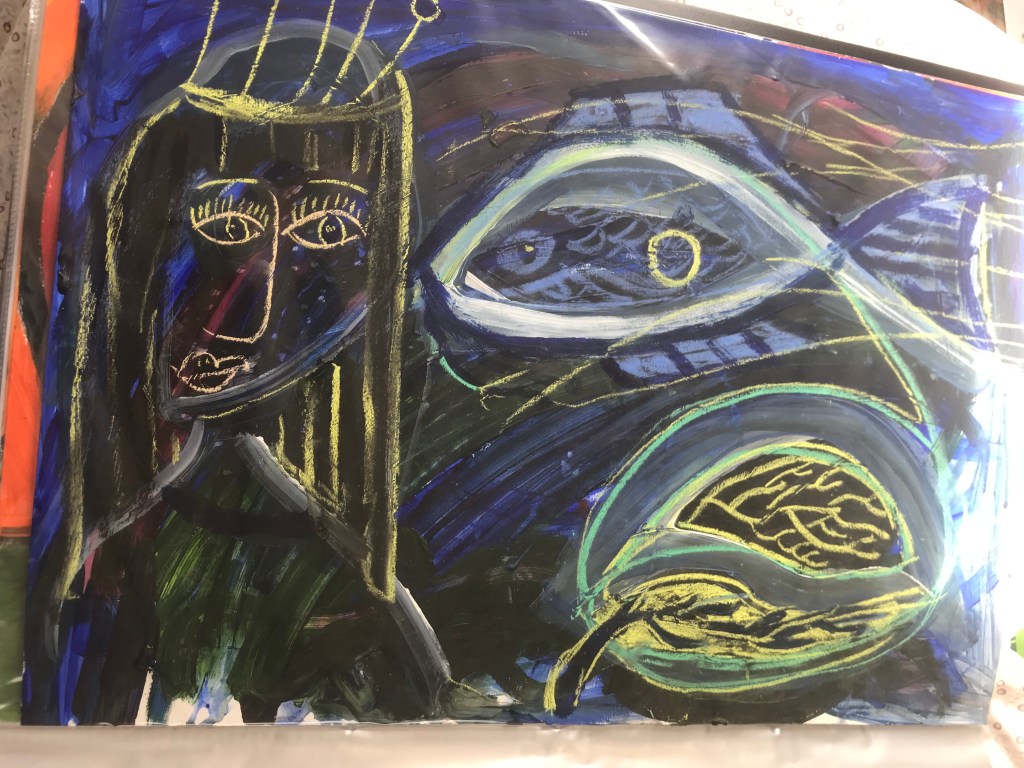


This image has an empty alt attribute; its file name is a951304d-2e45-4361-a8c2-24620be5979d-e1639928216676.jpeg
Golden ring, divided brain by Toby Chown

The medicine for story is to tell it, outloud. When done, the story starts to shift on the tongue. It shifts the neural networks towards the image, away from mechanical linear sequences and reaction towards ecological webs of reflection and association. Little details become available in the story that weren’t visable before. The linkages between the imaginal and the personal start to resonate. But what also becomes clear is that stories often have a mind of their own, and cannot simply be “changed” to match the curtains. They can be told with different emphasises but they cannot be changed entirely. To tell them you need to know them as fully as you can.

It may well be that all of the scripts of our life stories and of our wider political narratives have their origins in the mythic patterns that they emerge from. Yet the deeper you go into this mythic water by telling stories rather than simply talking about them, the clearer it becomes that such patterns have deep roots that don’t easily get swapped over or taken back to the shops for a better one.

A renewal of a story comes each time it’s told – this applies to personal confession and to fairy tale. Yet it’s a kind of descent into a world of chimerical poetics. Like dreams, it responds to your intention, so it might tell it to you straight, or lead you down a winding pathway. In each of those images from stories above a hook bound the archetypal material to something personal to me. Yet renewal also involves being touched by something deeply impersonal – something wild.

Ted Hughes puts it like this in his poem “Abel Cross, Dimsworth Dene” :

“Where the howling of heaven
Pours down on Earth
Looking for bodies
Of birds, animals, people

A happiness starts up, secret and wild,
Like a lark song just out of hearing
Hidden in the wind”


Abel Cross. Fay Godwin – Andrew Procter
Abel Cross by Fay Godwin

The poem is set in a specific location in Yorkshire, where two wayside crosses stand in the forbidding countryside. The wind pours down, strips the warmth from animals, people and birds. In this wild elemental power, the poet detects a hidden secret wild happiness, like a pagan reframing of the holy spirit’s descent. It’s something free of the need to be born or die. This might be part of the process of renewal, the regaining of contact with something not human, more than human, the capacity for life to renew itself in ways that spiral out beyond the ken of the human. Certainly in transitions in life, it feels like something needs to die, some part of the psyche. These crossings are made across very thin, fragile bridges, made of the soul’s attempts to find something beyond it’s known territory. I described such a thin bridge in a song that came out of taking my own song writing practice into nature, seeking for a way to cross:

“A bridge that spans
As thin as my chest
As thin as my hips
As thin as my mouth
As this as my lips
As thin as my soul
As thin as my heart
As thin as the thought
That keeps my courage apart”

(from “The Thin Bridge”)

The search for psychic renewal is basic to many fairy tales, one’s that feature the waning powers of a King and the need for a young son or daughter to ascend to the kingdom. This challenge shows up in the difficulty of defining an imaginal ecology – what are we doing when we engage the imaginal in nature?

I’d say that we are lowered down a hole in the old oak tree with a rope woven of three threads,
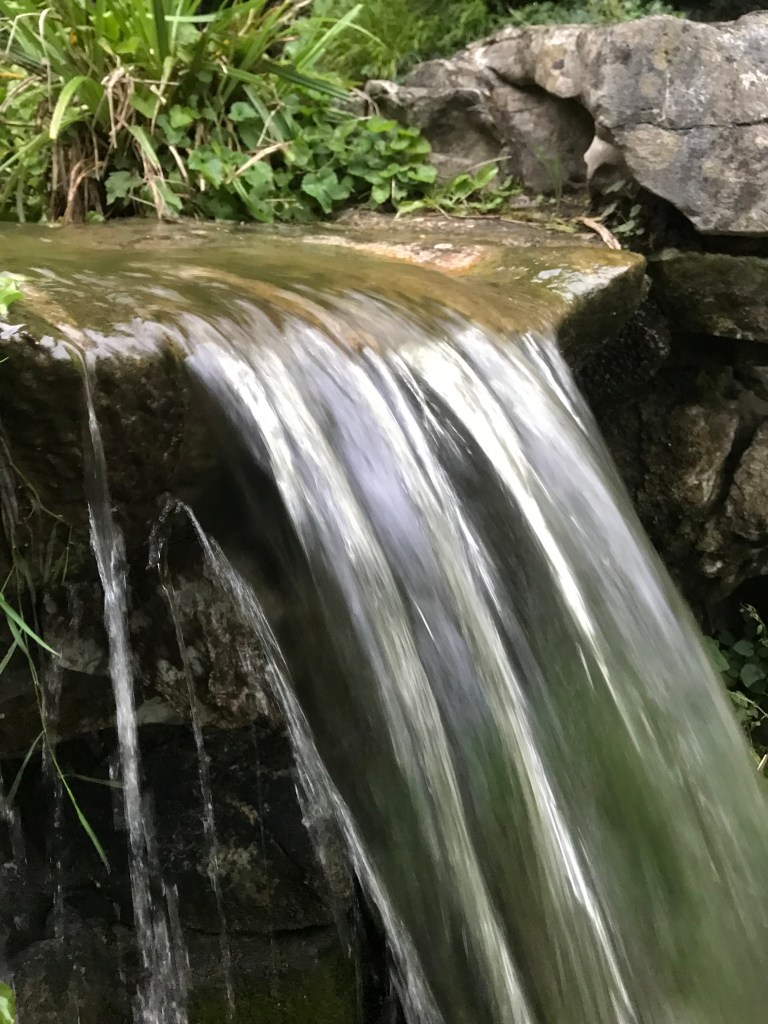
This image has an empty alt attribute; its file name is b7b16d80-f067-45d6-82f4-9874566ca488.jpeg

place,
practice
and perspective,

Place

An imaginal ecology needs to have a real relationship to a specific place, not “nature” in general but an actual place to be returned to and re-visited. Just as love is the simple revelation of the specific nature of another person, that is often choked by the concept of love and the desire for a phantasmic ideal lover so the love of nature needs to be grounded in a specific place – that Old Oak tree at the bottom of the woods at Blackcap, or Abel Cross. There is something about establishing a place and returning to it that strengths the soul, and builds a bond with a place.

Practice

Just as nature needs to be grounded in place, the imaginal needs to be grounded in a practice. It could be crafting words into poems or stories. It could be gardening, whittling sticks, walking to a place. It could be breathing exercises, meditation, journal writing. Whatever it is, it helps to think of a practice as a pathway in to the imaginal and of a way of crossing that thin bridge.

Perspective

Perspective lies in the reflective area between the world and experience of it. A perspective towards soul, the imaginal and nature actively seeks to find and create moments where this reflective space can become threaded into experience. Moments of soulfulness.

Rilke writes of the basis of his practice in this poem “Praise”

“O tell me Poet what you do? – I praise.
But the deathly and the monstrous,
How do you accept them, bear them? – I praise.
But the nameless, the anonymous
How, Poet, can you still invoke it? – I praise.
Under every costume, every mask of us,
What right have you to be true? – I praise.
Or that the calm and the impetuous
Should know you, as star and storm? – Because I praise.

The symptom is revelatory

Here we reach a particularly difficult area of psychology. Rilke doesn’t actually suggest we praise the monstrous and the deathly, or masks and illusion, or pride. He is suggesting praising anyway, that the thin wire of joy that actually runs through all things can still be praised. Yet it is certainly possible to find unexpected meaning in places that appear meaningless and destructive – or rather it’s worth turning them over and around to find what’s the feeling that’s trapped in them. As Michael Meade says in his rememberings of Robert Bly: “the symptom is revelatory” – our problems, illnesses and travail may show the soul’s reactions to them and may reveal where soul is hidden. Soul as psychopathology.

James Hillman wrote about a “poetic basis of mind” – that the psyche itself has it’s basis in poetics. That’s still a radical proposition. It’s hard to bear the truth of it. Anyone who works in mental health – and given the precarious state of the human psyche and our world that may well be every one of us by now – knows that it’s not easy to affirm beauty in the face of suffering. To do so seems to rob us of something. It takes away our complaint, and replaces it with the image of a crow bending on a thin sapling branch as the storm comes in. Or it shows us the vivid poetics of a chid’s reaction to being born into it’s parent’s deep trouble in the alchemies of slime that the child makes, or the six eared child a boy paints in a therapy session whose father broke into the house to scare his estranged mum. A boy with six ears may be six times more vigilant.

This creative power, both gift and curse rides with us as the year begins to spend itself out and head towards the darkest day. Each of us have this creative gift, in different ways, but strangely we seem to both fear and desire it. Perhaps that’s how come we need to praise these poets, Rilke, Hughes, Carlos Williams, for they seem to be doing it for us.

Jung had a word for the power other people have to hijack our individuation for us – he called it “manna personality.” In a world of petrified fathers and hyper stressed mothers, it’s not hard to see how come manna personalities hold such an appeal. It’s not just poets. Keith Richard’s writes of how in the depths of one of his legendary escaped he had the deep intuition he was doing this for someone else; someone bored of their life in the suburbs. The problem though is not with the enjoyment of other peoples creativity, which is a deep pleasure. It’s more of a problem when the image of the other person gets into the cracks of our personalities and starts to compensate for that which we feel we cannot be.
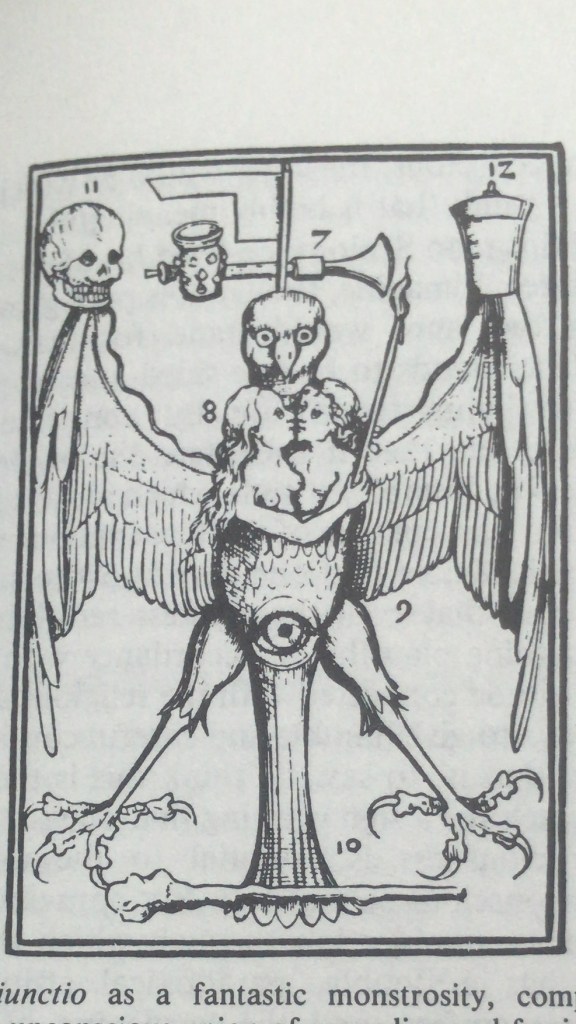
This image has an empty alt attribute; its file name is 9ca19f95-5eb3-41ca-940f-b7c677b49bf5-e1639928139148.jpeg
The coniuncto as monstrosity from “Alchemy” by Marie Von Franz

A large amount of pain arise from this, as we tend to revere and despise the people who fill these roles. And with social media this phenomenon can be monetised and repackaged as a career – after all what else is becoming an “influencer” than attempting to fill a psychological void for others?

Such is the difficulty we have with relationships, that we can even think of Nature itself as a mana personality to be revered or despised – or as a pastime.

Yet nature is not a pastime really, it’s the form given to reality. The soaked leaf litter, the fallen twisted branch, the has tree rotten with boring beetle, they all have not just a beauty but a reality. It’s also not human, and can be the holder of deep and vast mystery.
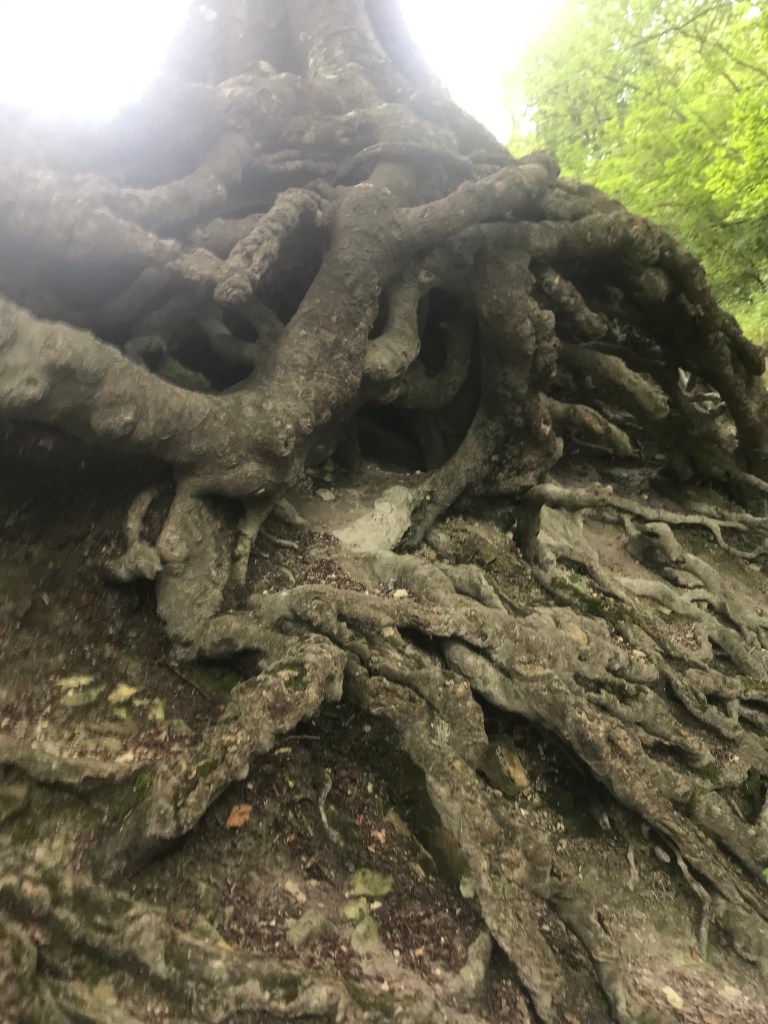


This image has an empty alt attribute; its file name is 1e65b98c-384e-405b-8292-74786935e176.jpeg
Beech roots at Chanctonbury by Toby Chown

Sooner or later, we have to face our own creativity, and it’s not necessarily easy. It demands certain things of us, asks us to pay a price. Hughes, Rilke and Carlos Williams were certainly paid wages in difficulty. My own practice this year has been to find out particular wild or semi wild places and to write a song there. To paint and to take dreams seriously, give them space, and then take them back into the places i’ve found.

Poems have been another way to open a doorway to renewal. I wrote this poem after reading Blake, and wanted to write something with the kind of a simple rhythm and rhyme and archetypal images I’d found in that hardworking agitator of angels, maker of illuminated book. I felt for something that held together the contraries of pain and beauty, of heart and life and that was able to affirm life at the end. I want to close this piece of writing with it, to offer it to you the reader as an exit to the year, and to wish you well for the holiday season, and for your own practice and soul work.

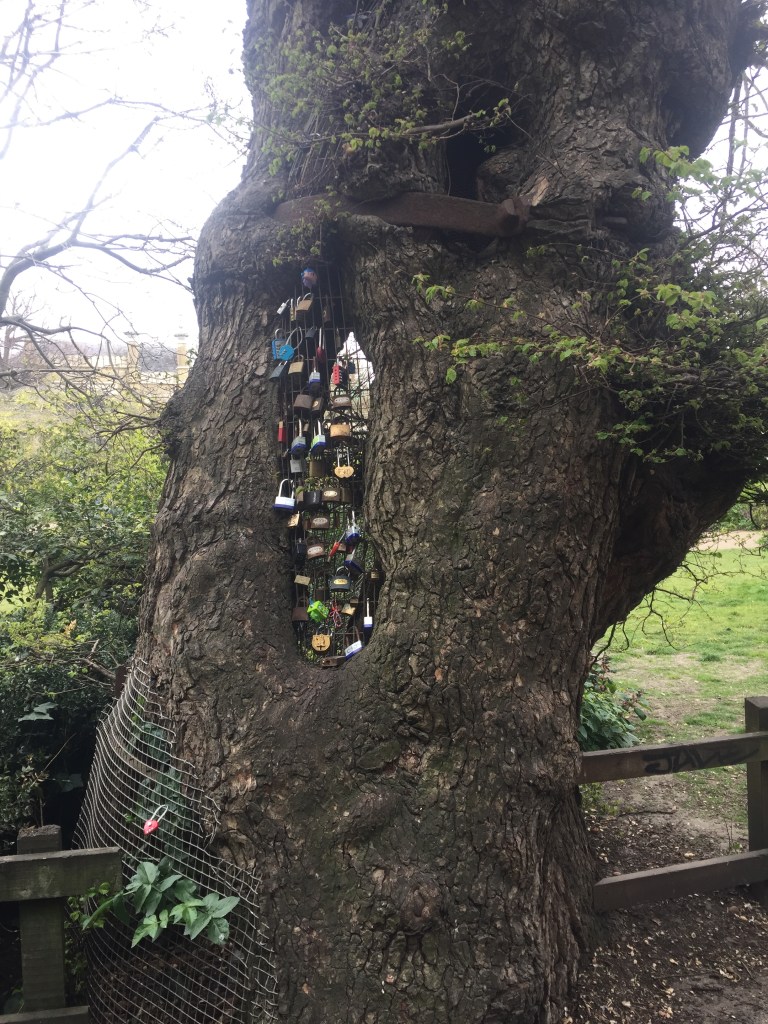
Here is a Lock

Here is a lock
there a gate,
There is an hourglass
clock that states:

“here lie the awful
drifting sands.”
A cage of flesh,
a cage of plans.

There is a man
on board a train
rocked by motion
numb to pain.

There is his life
it has a heart
it has an end
it has a start.

There is a you
there is a me
within the thorns
shall grow a tree

a lonely gutter
loves the street
that holds the steps
on which we meet

and all of heaven
in your gut;
lichen blooms
on old men’s huts

and all of hell
lies in your heart;
a wedding ring
the darkest art

and all my pride
conceals my shame
these snakes uncoil
i cry her name

and all the green
that’s in a field
sings “let me live”
and “let me yield”

and all the rivers
filled with shit
the crayfish swell
the trout’s egg split

and all the money
whispers need
for tattered coats
as corals bleed

oh all the fear
and all the pain
a world of flowers
each one named

and every spoke
on every wheel
knows every thief
reclaims their steal,

I see my hand
upon your face
yet every closeness
brings it’s space

every vision
offers wings
wants to show
each hidden thing

every mother
every son
every moon
and every tomb

each broken sigh,
still pointed star
a bag of crisps
a lump of tar

each drop of water
pure as salt
intoxicated
mash of malt

a body trapped
a body sung
a swan of neck
a kiss, a tongue

a wound that bless
smiles that curse
and pain persists,
a darkling nurse

an owl that blinks,
as ivy creeps
from morning’s wreck
til blessed sleep

this energy
will not be tamed
cannot be trapped
by maps of brains

as much as tides
or grass in wind
or slender trees
i love these things.
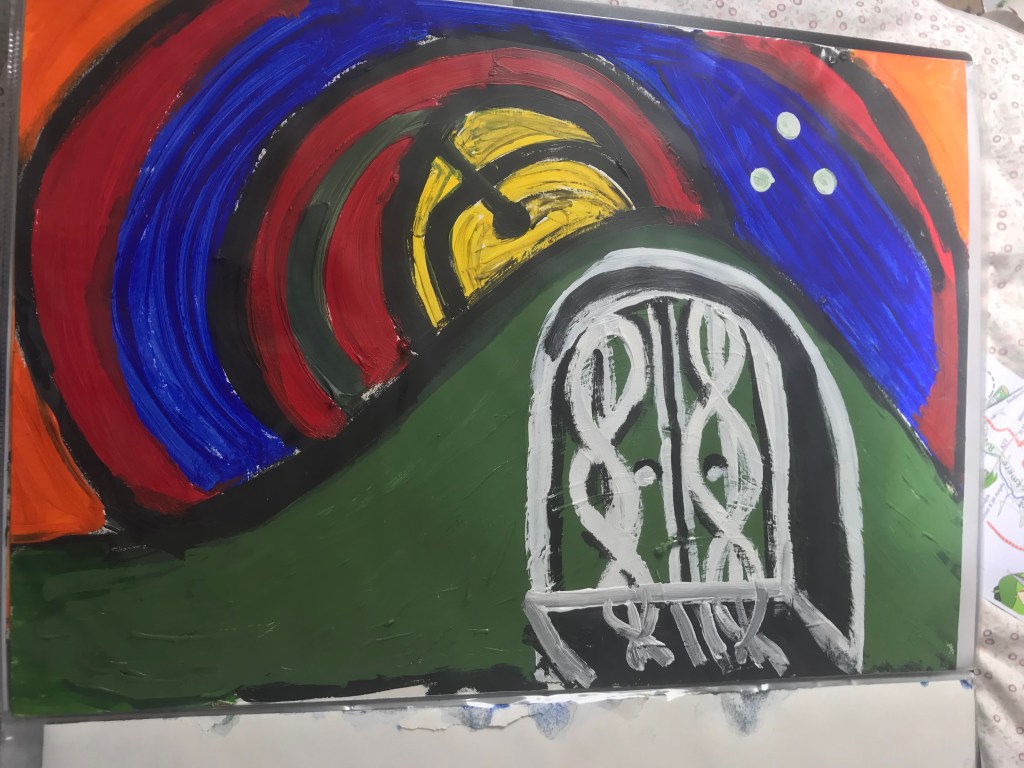
This image has an empty alt attribute; its file name is 20da85e1-21ad-4831-b7ea-56d0190a6b0c-e1639928095390.jpeg
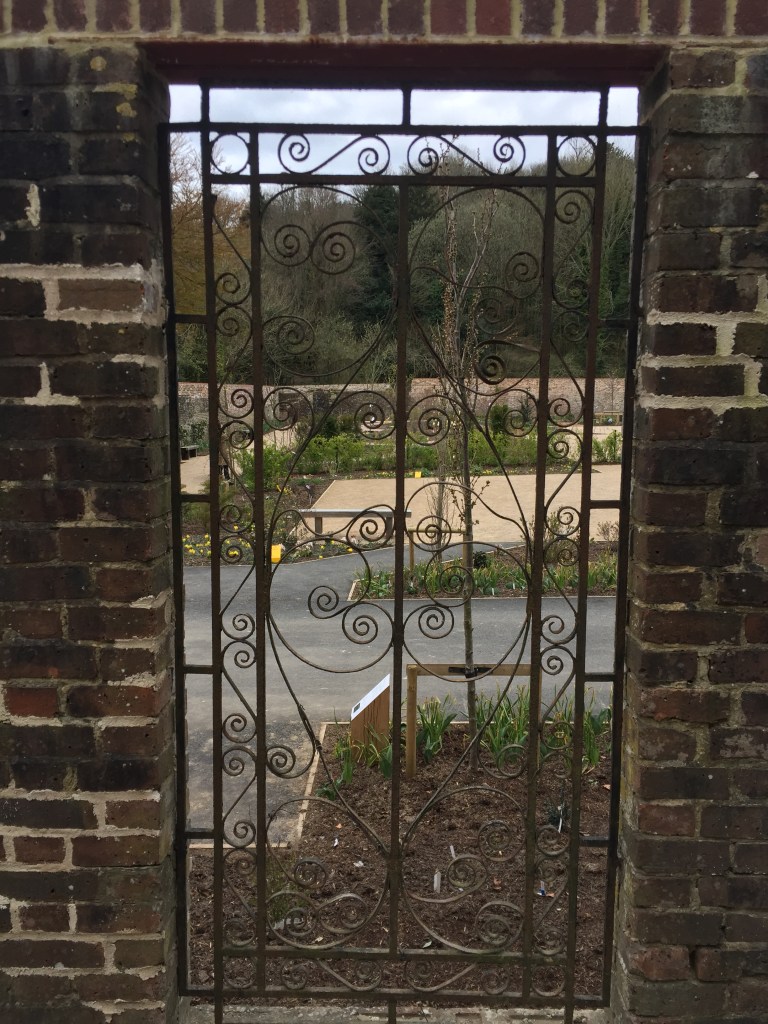
Doorway under the mountain by Toby Chown


Categories
Uncategorized

A Midsummer Night’s Wild Dreaming of Place

The plan: A story walk around dusk into the woods. The walk through the woods to a place in the land. There we sit, have a fire and hear an old story in a circle around the fire. After a reflection on the story walk back to the lower car park at Stanmer Park Nature Reserve, Stanmer.

Purpose: Stories reflect of the deep psyche, it’s compelling images and transformations. They offer food for the soul, a mesh of images spun only from somthing invisible; language, and sound.


Telling stories outside the listener becomes mirrored in the living images of tree, root, bird, animal, star, darkness, fire, and the moment of telling.


A story allows one to feel a thread of connection to the place it is told in. The images of story touches the places the dream of the listener and the dream of nature meet in the telling.


The ear finds a way into a story and the heart finds a home.

The fire, the woods and the ritual elements (circle, opening, story, reflection, closing) offers the psyche a wild container to feel the shape of itself in and experience the mythic imagination.


After the story the circle of people have a chance reflect on the images in the story and their own story.

After some music we close the circle, give thanks and walk home under stars.

You will need: a fold up camping chair/stool to carry, some water, hiking boots, a camping mug, a flashlight. The walk is at around dinner time, we don’t plan plan to eat together, but it might be worth eating before or packing a snack.

If it rains very hard: We might do it anyway if it’s raining lightly as we put up a temporary tarp, but if there is a storm or very heavy rain we will refund and reschedule

Meeting Time – Meet at 5.30pm – aim to return to Stanmer car park 9pm.

Timings – The walk to the site is about an hour. The story circle about an hour and a half, and about an hour to walk back.


Location – Stanmer Park Nature Reserve – Lower Car Park

Agreements : This is an event for adults or young adults in a more or less lucid state of mind and able to be present in this state to the woods, the self and others. Therefore it is a drug, alcohol, dog and child free experience.

https://www.ticketsource.co.uk/imaginal-doorway/a-midsummer-nights-wild-dreaming-of-place-story-walk-fire-circle/e-kgvxxj

Categories
Uncategorized

find a thread of soul and follow it.

I’ve been writing poetry since I was 17 at least.  (I’ve written about that here) It seemed like more of a necessity than a choice.  However reading poetry has always been a little harder.  Somehow easier to write it than read it.  The first poet that really lit me up was ee cummings.  The deep fuse of joy seemed so wired up in his words.  Later I found Ted Huges’s blunt shamanic poetics, Neruda’s humane sensual cosmology, Lorca’s startling imagetics.  I wouldn’t say that I was a scholar of poetry.  It’s always been more something that burst out in the feel of certain phrases, a kind of threat of meaning that coils out of the words into the nervous system and world.

This image has an empty alt attribute; its file name is 37eec1db-8e4c-4e2d-9980-c78fdd522041.jpeg

Love of words spilled out into lyrics, the WuTang Clan’s dense adrenalised flows, Anthony Keidis from the Red Hot Chili Peppers mix of eros, brotherhood and wordplay, of course Dylan’s ever open road, of wheeling images and mercurial love.  Recently I’ve loved Cat Power’s feeling soaked threads, where each word becomes a small bird that could lead you to a promised freedom.

But poetry like any art form has often been encased in hard shells of intellectualisation and high culture.  It’s not always easy to read poems, and sometimes it can be hard to work out if that’s the readers problem or the poet’s.  Not all poetry might be worth the time or effort,  perhaps because the point at the end is not “poetry” but more a the experience of a feeling that connects.  It could be there in a car manual or a work of fiction as a poem.  Stephen Harrod Buhner speaks well to this.  Connects what to what? Well, that’s the question.  Connects our life to our soul, to something that binds our nervous system to a deeper tangled world beyond the merely human. It’s definately out there in the woods after sunset.

I prefer the idea of poetics to poetry, because poetics reaches out from the page to that tangle of bird song, vine and branch. I don’t want a pastoral fantasy of poetics; an imaginal ecology lives in small flowers that crack pavements, or at crossroads where dark winds blow traffic lights at midnight. 


It feels important to guard against too pastoral a fantasy of nature, because it’s another way of drawing a line around the city and saying the wild is “out there”.  It’s either a redeemer or it’s savage.  It’s another way of reducing the mystery of nature and life down to a safe landscape or a blind set of jaws.

It reminds me of the general problems of idealisation, that has comes up more intensely in romantic entanglements.  Idealisation is the killer of romance, it replaces real people with statues, and invites harsh judges to the wedding of person to that statue. 

Even when i fell in love at the age of 20 I could feel the idealisation within it of the woman I was attracted to.  Now, having been steeped in Jungian psychology a while, and practiced as a therapist I might call it “projection.”  The projected image is not human, but it is irresistable and imbues itself into who you think the Other is.  It blends with your unconscious, and take the form of people you know at night in your dreams.  Projections needs to be treated with care and respect, as they are full of intense feelings, often related to something that feels impossibly absent to your ego. Something it feels it desparately needs.

This image has an empty alt attribute; its file name is 5d52c088-c492-488a-9f16-7739e080a4c2.jpeg

If projections are “withdrawn” then some of the feelings and needs that they consist of need to be placed somewhere else, as they don’t fully belong in the ego.  One way of doing this is art making, writing, painting, transforming intense affect into metaphor – these become containers for archetypal forces, ways of being moved without having to play the whole drama out in real life.

It’s worth remembering that we don’t only project “outward” onto others, we can also project “inward” into parts of our selves, onto our sense of nature, subpersonalities or of spirituality, powerful ideas or gods.  Our sense of what’s within can be as distorted as what we see in others, often more so.  It’s very easy to idealise inner forces and to put ourselves down. These projections can be persecutory as well as idealised; Jung wrote of them as “everything the subject refuses to acknowledge about herself” (CW 9i p284)

Perhaps that’s where an imaginal ecology comes in, as it offers a direct experience of how the imaginal flows from what we call nature, and links to the soul.  Jung thought of soul as the deeper parts of  “personality,” not accessible to the ego.  Bill Plotkin in his new book “Journey into Soul Initiation” re-visions this as the finding within your personality of something highly specific to you that connects you to the deep dream of nature, yet that ultimately serves both your human community and nature itself.  As a stage of soul to be found when you have been able to heal your initial wounds well enough, to estalish a good enough sense of who you are in relation to others. Plotkin suggests that this transformation requires a deep knowledge of self, wild nature and an ability to self heal well enough to face the depths.

This image has an empty alt attribute; its file name is 2eda584b-0628-42d6-a3ae-d5132b035e3a.jpeg

Poetry can aid this retreival of soul, because it renews the awful shackles language can place on us.  “Man is half angel because he can speak” wrote James Hillman.  He noticed the word “angel” means “messanger” and how words themselves can be angels, as they carry messanges.  An illuminating idea, that words themselves may not be just tools, but also have a kind of life to them, a reality of a different order. Words have a particular kind of power. “We need to remember that we do not just make words up or learn them in school, or ever have them under our control. words like angels are powers that have an invisible power over us.” (Hillman a Blue Fire p 28) He goes on to make the curious statement :”words are persons”

Yet written words are far more often used defensively to neuter feelings, or shut down dialogue, to give orders, defend ourselves from attack.  If words are persons we employ them as bodyguards, lawyers or PR men too often. The use of written language in legal matters, in advertising, and  on social media show all this.  Iain McGlichrist writes about how the use of language very easily falls into the kind of attention of that part of our brain concerned about power and control. 


This is especially true of writing, which keeps the immediacy of others at a distance.  It is as if there are two forms of attention, woven into the very fabric of our brain that are engaged in a continual, subtle struggle. One  monitors for threats, splits things into parts and processes, attacks, or defends the self.  The other form of attention has no form, it simply opens up to a deeper and deeper world, filled with feelings and images.  It is this second form of attention we need to be in touch with if we are to become able to revive our ability to nourish the living Earth we have abused and neglected.

The first kind of attention often arises as a response to trauma, that sends us “into our heads” where we find a rolling spoken narrative, that will make comment on anything coming in from the more open forms of perception.  Poetics (noticing the existing poetics in the world) and poetry (writing this down) can help to break through to the felt sense, that allows us to re-connect to the experience of nature and the body as mind.  The heart, the elbow, the kidney.

This image has an empty alt attribute; its file name is 4ae4d9b1-dbc7-48b0-88ed-7bce909d2e0e.jpeg


To demonstrate this, I’m going to share a poem I wrote as part of workshop I helped run.  The workshop was called “the taste of a wild red rose: soul retrieval through story and myth.” I ran it with Serena Mitchell, poet and storyteller. We worked with a couple of stories that Martin Shaw tells well – the Lindworm and Tatterhood.  Do check out his excellent tellings if you haven’t.

However, we began with a poem.  So, here’s an exercise for you adpated from Stephen Harrod Buhner,  to do if you so please, to help find one of those golden threads between your self, the imaginal and nature. 

Firstly read the poem below. 

Secondly, listen to the recording of it. 

Notice the difference between the reading and the listening, the differences that each mode of delivery has on your body, your nervous system, your mood. 

Pay attention to any limages that reverberate with you.  Allow yourself to linger with them.

Let any images from turn over in your mind, see what they engender in you, what feelings they bring.  The aim here is not to critique the poem, but to allow it to breathe a little, to have a little life.  (If you want, pick a poem that you know you love)

Poems like to talk to each other. Images pool together in a common source in the psyche.  Remember that if you like a certain line, if it sparks a feeling in you, you can write a line youreself the same way, follow the same feeling.

Then, when the time is right, go for a walk into nature,  to the place nearest you that you like best, where you will see the least people. Go alone if you can. Find a place away from others, where there are an abundance of plants or trees and you feel safe.

Take a pen and a notebook and go our for a walk, taking whatever image reverberated in you with you. Just turn it over, don’t analyse it.  Go find a spot you can sit.  It must be a spot that feels right for you today.  Don’t take too long over this, but do pay attention to your feeling for the place you are in. 

How does the place feel, not so much how do you feel about it, but how does it feel?  Now sit and write down what comes to you in response to the poem and your feeling for this place.  Write the feel of the images.  Remember, images don’t have to be visual , they can be felt, smelled, half known, heard, intuited. Don’t take too long about, set limits,  give yourself 5 or 10  minutes.

Be obvious, direct, simple. Say what is there for you.

Limit your writing to 3 pages of your notebook.

When you get home speak the poem into your phone if it has a recording device.  Listen back to it Send it to someone who you trust to recieve such a valuable gift.  Make sure you send it to the right person.  (if the poem is about another person, it might not be that person! or maybe it is.  But send the recording to someone whose opinion you value and who will recieve your work in the spirit it is intended, and not someone who wishes to edit it.  If you don’t have someone you can send it to me.  But do think about who would recieve your poem in the right way)

Here is the recording:

https://soundcloud.com/tobychown/wild-red-rose

and the same poem written:

The Wild Red Rose.

Ah! the Wild Red Rose….

It’s fragrance stretches all the way
from Sussex gardens
to London,  Sheffield,  Kenya,
It might reach you wherever you are…

It whispers in your ear
That you can slow the restless mind
into the same dream state as  holly or yew;

You can sway all night with the wild owl’s cry
amongst a tangle of roots,
Ferment your soul within the dark cauldron sky.

I yearned for a tongue
as articulate as hawthorn.

For that eyes that flash silver as
coins under the full moon at midnight
In the telling of my story.

The wild rose longs to make your hair as wild as clematis
your skin as smooth as a young beech tree,
Longs for your speech at stretch it’s  gentle vines
beyond whatever masks, shields, gates or locks you placed
to keep trespassers out,

It yearns to transform the shame and the dark abyss they protect
into a temple of roots, leaves and simplicity.

Wild rose kindles a fire that seemed dead, 
blows sweet smoke onto the heart’s embers,
You know, even after all these years, something smoulders in those embers.

I waited for years for the return of it’s scent,
never realising that the padlock to it’s secret garden
Had been locked only by myself.

I turned the key, heard the shackle release
pushed open the iron gate,
Walked through the garden and on into the forest.

On the edge of the trees, I found a wild rose
entwined into brickwork of a ruined castle wall.
Her structure as intricate as blood vessels,
petals proud as a flag,

I recognise her traces in the architecture of my heart,
Her twin my every breath

I had to drop my book and pen
to describe her,
Had to become speechless to speak of her,

I had to put down the black sack on my back
I’d carried twenty years to register her in my body;

I poured it’s contents out at her roots to nourish her.

She asked me to surrender romantic fantasies,
About what I though love should be
To learn how to really love her wild honey.

She takes the form of a panther, a deer,
A wandering light, a child.
She came to me in the form of a woman I love one night,  and said

“Come a little closer, let me touch your blue heart,
with the promise of a rose;

Let me nourish you.

Let the soul’s story be your story”

Even now, especially now,
As the ragged world,
Flagellated by electricity and pollution
Crumbles back into
The unknowable matrix of it’s own wild soul,

As the oceans choke and coral bleaches,
And the people cry out in seasons of desert, fire, flood
As the stability of the seasons
breaks from it’s tether into a new unknown,

A wild rose clings to the brickwork of a secret garden.

Intricate as the structure of a heart,
As deep a breath,
As wild as a rainstorm

A wild rose still grows, still waits,

still repeats it’s mantra:

“Let the soul’s story be your story”

Enjoy the exercise!

find me on instagram https://www.instagram.com/tobyjoelc/


Categories
Uncategorized

The Wound and the Eye

I’ll say a word: “sadness”
and give you a thorn in bloom,

the world and you seem tinted blue
and filled with bitter perfume.

Sadness is a world you see,
“the wound and the eye are the same”

reaching down to the chalky ground
where the bones and the dust remain.

But sadness is only a word you see
the world overspills the eye,

a dull warm ache, a need to relate,
confusion persists as to why.

So I’ll say a word: “sadness”
but sadness is only a word

beneath cement, a deep lament
above it, the song of a bird.

Categories
Uncategorized

Recognition – the problem of integration

Here’s a thing. I spent a lot of time trying to figure out the perfect way to share my artwork. I spent a lot of time trying to work out how it all fitted together – how the dramatherapy fitted with the poetry, how that fitted with the ecopsychology, how that fitted with the music, how the different types of music fitted together. There was kind of wild rock music, sweeter accoustic stuff, hip hop like stuff. There were long lyrical poems, short strange ones. Then there was the desire to link it all to ecology, to nature, to the wild, the archetypal the imaginal. How that fitted to my practice as a creative arts therapist, how that fitted to my practice as a writer, how that fitted to my guitar, how my guitar fitted to my loop station, how that fitted to my pen…how that fitted to the mycelial networks of trees, how that fitted to my own neural network…I think you get the drift…

I think there is a good deal of pain in this desire to “integrate” the different parts and activities of the self, to make it all fit into a perfect whole. To try and squeeze into the skin of a raven and fly when you need to be more down to earth, as Martin Shaw puts it nicely in one of his stories. It’s nothing other than a denial of the mutiplicity of being human. James Hillman’s writings suggest that a secret violence can underly attempts at integration, and that in the depths of oneself, multiplicity always continues:

“For even while one part of me knows the soul goes to death in tragedy, another is living a picaresque fantasy, and a third is engaged in the heroic fantasy of improvement” Hillman, A Blue Fire.

There are ways of linking together these activities, and all these different selves. I feel it can be worthwhile thing, creative in it’s own right. I have been preparing an essay called “what can imaginal ecology become for you?” which is a way of explaining how poesis can become an extension of the experience of nature, of how as the experience continues, it becomes poetic, because within the ever shifting tapestry of root, soil, bird, spider, rain, Sun, night, owl, moon, death, holly, chick, worm, skull and child lies a poetry that is not human and which human language draws upon to say anything at all but is not the container for.

However, the attempt to make all parts of the self perfectly presentable, to “fit” exactly together can be a dangerous thing psychologically. It builds an empire of the self under the stamp of the single image of the emperor. It feels like the worship of an empty mask, the persona that faces the world rather than the soul that lights it up from whatever mysterious depth that soul light comes from. Because the self is more like a theatre than a king’s head on a coin, and more like a wood even than a theatre, a living shifting ecosystem of dream and body.

So here’s another thing that links the creative to the wild; it’s always the poems that I really feel strongest that I want other people to read, yet it’s often the explanations of them that I end up sharing first. It is the pieces with the strongest feelings and images that I want to read when I dive into my notebook. These are visits to the wild, more satisfying than visits to the museum, yet less easy to understand.

Yet they often feel the hardest to share. Safer to give an explanation. Safer, yes, but no one ever gets to go to that place that poured from you like water from a rock, at the behest of some unknown power.

Some things do need explanation; and I am working on something I think will be helpful to you – I want to share ways to approach the imaginal ecology as a practice, as a perspective, and as a realm or place to visit. I want to share how all these things are all aspects of the same thing, how practice means the practice of perspective, how developing an imaginal perspective is also visting an imaginal place.

It’s been a long hard winter, and it’s clear that all is still not well in the world. I think we need more than ever the kind of art, fiction, storytelling, poetics, music and philosophy that know in their heart that we tumble the world around us, anew and somehow changed when we venture to create. That help us to carry our story, and to dive with it into the deep roots that sustain it.

Sharing art seems inevitabley linked to a desire for recognition. The desire for that recognition can bring a similar pain to the desire to “integrate.” Which part of the self gets the recognition? It seems we wish for and fear recognition, as the warm glow of knowing we have been heard can become the harsh searchlight eyes of a judge. Recognition itself has archetypal qualities, – re- cognition – thinking again. Thinking again about what you created with the feeling of having been read or heard. In this way it opens up the dilemma about our need for and fear of others. Yet to be recognised, truly recognised, itself speaks to a doorway in the soul’s wall that leads to a garden. The heart that imagines, and knows it may judged, and is able to turn around and accept that as the price for it’s dreaming, and it’s connection to others.

With that in mind, I want to share a poem called “Recognition”.

Recognition

My heart sees mountains in clouds
Watches dead temples
Come to life on
A tree crowned hilltops
Gazes at the deepsigh sunset
Watches the ghosts of pilgrims
Circle the anticlockwise hill
Seven times for a bowl of soup.

My heart follows you
Into the serpent Sun you speak
To free yourself from the iron cage
You constructed to keep yourself safe;

It wants to witness your unshakeable Blakean spear
And know you in your moments of nakedness and confusion

My heart sees you run,
Electric as a white hart in flight
Hears the hosanna you sang
When you fell to your knees and wept
Before a solitary tree

My heart sees you in two places at once
Doesn’t seem inclined to care which is which
Or for the reason why you ran,
Or the reason why you sang

And if you saw God in the grassy bank
Or Satan in the medication, the corporations,
The glass and metal banks,

My heart slips like a shadow through each door to follow

I do not come to flatter to the heart,
To coat it with a baste of praise
Swollen and bloated
Boiled like mutton in an witch’s dark cottage

I want to bear witness
Not to it’s power or capacity for salvation
But it’s tenacity and fortitude in the face of
How little it knows

I do not want to crown the heart in gold
Or swathe it in purple as a smug emperor of an inner kingdom,
I know my heart can cling too long,
To ghost of past loves it would do better to release,

That it madly chases archons and demons through labyrinths of world
through intricacies of the nervous system
I know my heart can be scheming, deluded, complacent and strange;
That it’s not a god but a process,
That it must weigh less than a feather
When it crosses the last threshold.

I know the heart is not it’s own kingdom
It needs an eye, a hand, a core,
It needs language, landscape, companions,
Doorways, guitars and the sudden scent of cherries

It needs to blacken in the embers of fires that it started
Peel off the charred ashes flecked white as a crazy moonbeam
Blue as a whale in the song of it’s solitude
Red as that shade blood becomes when lust’s consumed by love

I know most of all, it needs the promise of a beloved.

Well, forget all that.
Today, I just want to praise
the simplicity of it’s perceptions,
It’s capacity for regeneration,
To garland it with wild flowers
Like a girl at her first dance
Who doesn’t know she is pretty

I want my heart’s angel to
Whisper leaves, friendships and the secret language of dusk
Into the folds of my heart’s loneliness.

And I want your heart to know
What it means to be called by name
That you’d turn, in a garden
On a startled heel’s pivot
And know in your heart’s chamber
The warm shock of recognition.

Categories
Uncategorized

Recognition


My heart sees mountains in clouds
Watches dead temples
Come to life on
A tree crowned hilltops
Gazes at the deepsigh sunset
Watches the ghosts of pilgrims
Circle the anticlockwise hill
Seven times for a bowl of soup.

My heart follows you
Into the serpent Sun you speak
To free yourself from the iron cage
You constructed to keep yourself safe;

It wants to witness your unshakeable Blakean spear
And know you in your moments of nakedness and confusion

My heart sees you run,
Electric as a white hart in flight
Hears the hosanna you sang
When you fell to your knees and wept
Before a solitary tree

My heart sees you in two places at once
Doesn’t seem inclined to care which is which
Or for the reason why you ran,
Or the reason why you sang

And if you saw God in the grassy bank
Or Satan in the medication, the corporations,
The glass and metal banks,

My heart slips like a shadow through each door to follow

I do not come to flatter to the heart,
To coat it with a baste of praise
Swollen and bloated
Boiled like mutton in an witch’s dark cottage

I want to bear witness
Not to it’s power or capacity for salvation
But it’s tenacity and fortitude in the face of
How little it knows

I do not want to crown the heart in gold
Or swathe it in purple as a smug emperor of an inner kingdom,
I know my heart can cling too long,
To ghost of past loves it would do better to release,

That it madly chases archons and demons through labyrinths of world
through intricacies of the nervous system
I know my heart can be scheming, deluded, complacent and strange;
That it’s not a god but a process,
That it must weigh less than a feather
When it crosses the last threshold.

I know the heart is not it’s own kingdom
It needs an eye, a hand, a gut,
It needs language, landscape, companions,
Doorways, guitars and the sudden scent of cherries

It needs to blacken in the embers of fires that it started
Peel off the charred ashes flecked white as a crazy moonbeam
Blue as a whale in the song of it’s solitude
Red as that shade blood becomes when lust’s consumed by love

I know most of all, it needs the promise of a beloved.

Well, forget all that.
Today, I just want to praise
the simplicity of it’s perceptions,
It’s capacity for regeneration,
To garland it with wild flowers
Like a girl at her first dance
Who doesn’t know she is pretty

I want my heart’s angel to
Whisper leaves, friendships and the secret language of dusk
Into the folds of my heart’s loneliness.

And I want your heart to know
What it means to be called by name
That you’d turn, in a garden
On a startled heel’s pivot
And know in your heart’s chamber
The warm shock of recognition.

https://soundcloud.com/tobychown/recognition

Categories
Uncategorized

La Corona and the Tin Frog’s vision: Liminality and imaginal ecology in the time of the virus.